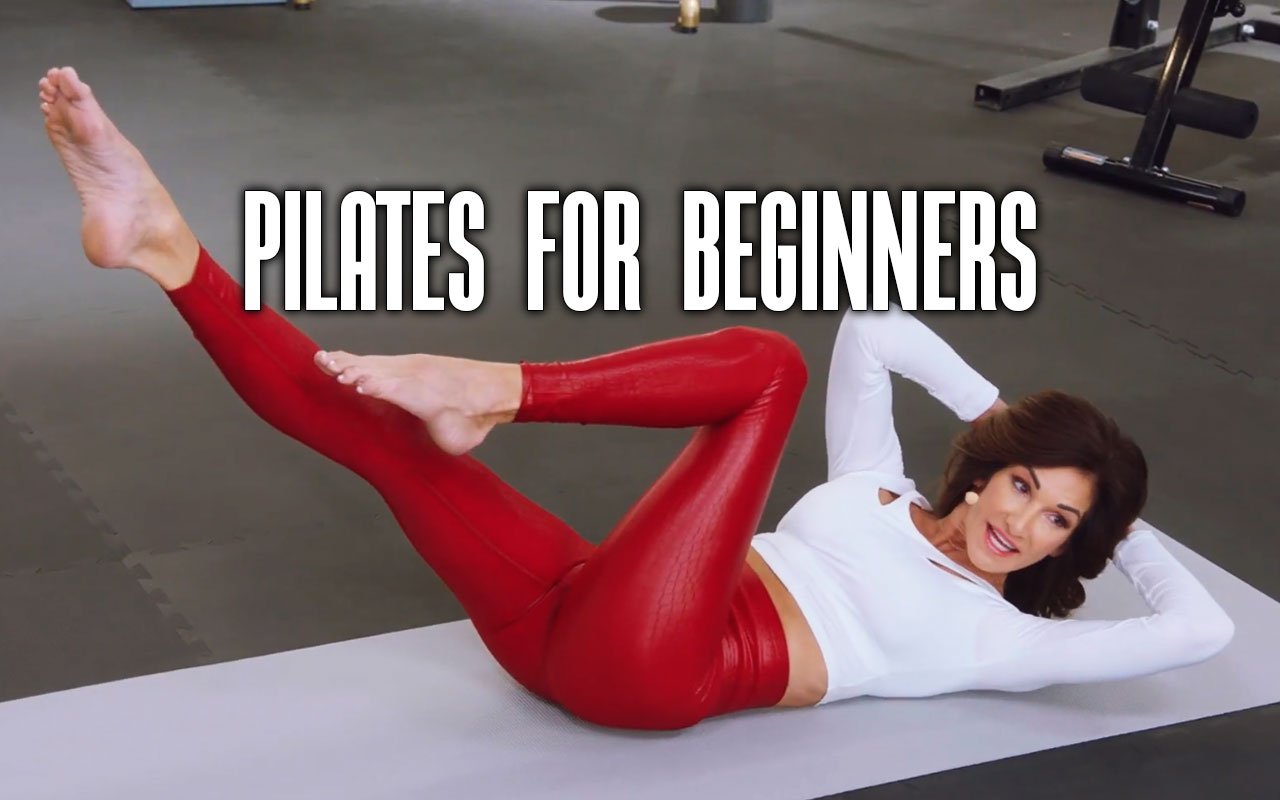
Pilates, which is now a household name, has undoubtedly attracted your attention. Pilates workouts can be adapted and modified to meet your needs at any age and we will show you a complete guide to Pilates for Beginners.
A beginner exercise establishes a solid foundation to develop and immediately produces strength and self-awareness.
Pilates workouts can be adapted and modified to meet your particular needs at any age. Consistent practice allows you to move with ease, power, and renewed vitality by supporting and enhancing your lifestyle.
On the other hand, Pilates is far more than what popular culture depicts. Yes, it’s a fantastic workout and great for your core, and it helps you maximize strength.
Pilates also improves your body’s structure by balancing strength, mobility, and flexibility.
It is for everybody, no matter how old they are, how tall they are, their race or gender, or their physical ability. Pilates may be customized to fit each level, with over 600 exercises and variants. It works for both absolute beginners and professionals.
Keep reading for further information if you’re interested, new to the technique, and unsure where to begin.
What is Pilates?
This full-body fitness strategy, formerly known as “Contrology,” was developed in the early 20th century.
Mr. Pilates instructed and treated various people from all walks of life, including many celebrities. The Elders became the gatekeepers, a small group of most performers. The Pilates method was further refined and developed, eventually becoming a household name.
Pilates is a form of strength training that employs matwork and equipment such as the Reformer, Tower (or Cadillac), and Stability Chair. It’s a popular therapy used by physical therapists and advised by doctors.
It’s a low-impact exercise approach that aligns the body, creating strength through muscular balance and neuromuscular fine-tuning, so it’s accessible to everyone.
Pilates may be used to help restore or build strength. While it isn’t a heart-pumping aerobic activity, you may sweat while feeling your muscles work differently. It’s recognized for using various strengthening techniques to target the more minor, deeper, and frequently neglected stabilizing muscles that support the joints.
Because of this, the Pilates pain you’re experiencing may be distinct from the kind of discomfort you get from lifting weights or pushing yourself hard in a spin class. Even when you start Pilates, there is a significant advantage.
Pilates’ long list of advantages includes better posture, core strength, flexibility, and balance and aids in preventing back pain and tension.
An excellent, consistent approach is meant to provide comfort and power. It aids in reducing pain and increases mobility and vitality while you go about your daily tasks.
Is Pilates suitable for beginners?
Yes, Pilates is ideal for those who are new to the activity.
Pilates’ marketing focuses on the more acrobatic movements or demonstrates dancers on machines doing the splits, which is a great deal of Pilates advertising. Don’t be scared if that happens to you.
Pilates exercises are done progressively, beginning with the simplest and moving on to more challenging versions.
Even professional athletes begin with the fundamentals. Many experienced trainers prefer to do a basic routine with no weights to solidify their foundation.
A great instructor will adapt the exercises to your level, ensuring they are safe, successful, and challenging.
It’s critical to pay attention to your body, do everything you can, and remain consistent to improve.
What you must know when you start Pilates
It’s crucial to comprehend that Pilates is a journey when launching a practice. When you maintain the same amount of focus throughout a session, your grasp of its ideas will increase.
Pilates targets the entire body; one part of the body is stabilized while another is moving. At the outset, some movements or ranges of motion may need to be reduced and built up gradually as you become stronger.
The method is built around using two principles: control and precision. Choose quality instead of quantity, and you’ll receive better benefits for your body and life.
Another fundamental principle, breath, is necessary for Pilates exercises. The breathing component of Pilates, known as breathing exercises, increases your lung capacity and is the precursor to the movement.
Pilates breathing encourages three-dimensional breathing patterns and the rib cage and diaphragm, allowing for deeper core engagement. The lower back, glutes, hips, inner thighs, abdominals, and pelvic floor are all part of your core.
During Pilates exercises, attempt to achieve a supple activation rather than bracing or gripping with the core muscles. Consider your trunk to be wrapping and lifting rather than “sucking in your belly.”
If your instructor uses signals that seem unusual at first, don’t be concerned. Pilates is an uncommon exercise that may feel like learning a new language when you first start.
Attempt to approach the exercises with an attitude of discovery, and you may be surprised by what you find.
Equipment you’ll need when Pilates for beginners
All you need to begin a Pilates practice is your body, a mat or soft surface, and a small towel (preferably something like a carpet, not a bed that’s too soft).
A yoga mat is typically too thin, and Pilates rolling routines can be unpleasant. If you have the money, buy a thicker, softer mat. Alternatively, you may use a thick bath towel or blanket to cover your yoga mat.
Some instructors and classes may require the use of additional equipment or aids. Props enhance the challenge, add variety, or help support.
Minor components include:
- The magic circle.
- Lightweights (such as canned food or water bottles).
- A tiny ball.
- Therabands.
- Even the Swiss ball.
Pilates for Beginners workout plan
Your breath is the one thing you should concentrate on or master initially.
Your breath is an essential component of core engagement since it increases vitality, working in tandem with and assisting to power the exercise. It’s the foundation of every movement.
Three times per week is the most common Pilates schedule. Twice is sufficient, and daily practice is not only feasible but also non-taxing on the body. Set yourself a goal: to discover a rhythm that works for you.
Every moment of your existence is unique. As your self-awareness grows, you’ll be more aware of your body’s needs.
Every workout will be unique in its way. When you’re feeling weary, take it easy. If you’re feeling down, do some exercises to move your body and have a good time.
Considerations for Pilates for beginners
When beginning a fitness program, always seek medical advice from your doctor.
There are different Pilates routines for specific groups, such as pregnant moms, the elderly, and those with lower-back ailments or poor bone density.
Stop and reconsider your workout if you’re feeling pain. You may learn to modify or skip a movement with experience and improved body awareness.
If you have the opportunity, work one-on-one with a certified Pilates instructor. Even a few sessions to solidify a foundation and learn modifications specific to your body are beneficial.
Where to go from here
Pilates’ future development, both online and in-person, has several possibilities.
Online options for both on-demand and live Pilates classes abound. Pilates workouts are also featured on -> Our Fit It In video series even contains 22-minute long Pilates routines as part of our health and wellness portal.
If you want to try Pilates exercises on a machine, look for local centers in your region. Studios are almost universally available with one-on-one sessions and group lessons.
Pilates’ most well-known and popular components are matwork and reformer exercises. Studios provide Reformer-based group lessons at a lower cost than one-on-one sessions, which are less expensive than matwork-based ones.
Other facilities may have different specialist equipment categories, such as the Chair or Tower or a combination class.
You’ll want to check their records for verification and meet them or take a trial class to see whether their approach works for you when it comes to instructors.
You’ll want a Pilates instructor with extensive training and more than weekend workshop instruction.
The bottom line
Pilates is beneficial to your health and offers an excellent workout for everyone.
A beginner exercise not only forms a solid base from which to develop but also generates strength and awareness right away.
Pilates for beginners exercises may be adapted or broken down to fit your needs in your life. Regular practice allows you to move quickly, vigorously, and with new vitality because it supports and adds value to your life.
You May Also Like
At Home 8 Pilates Moves To Strengthen Your Pelvic Floor
April 29, 2022

Best Exercise Weight Plates For Home Gym
July 16, 2020

Best Stamina Pilates Reformers with Rebounders
October 1, 2019